
Nipah Virus Outbreak
TL;DR
Nipah virus is typically found in bats and pigs but can occasionally infect humans. It was first reported in 1998 among pig handlers in Malaysia and Singapore. No new cases have been found in Malaysia since the outbreak ended in September 1999. There was a recent outbreak in West Bengal, India, where two cases were confirmed in mid-January 2026. The Ministry of Health Malaysia has since tightened screening at ports of entry and advises travellers visiting at-risk areas to stay vigilant and maintain personal hygiene.
What is the Nipah Virus?
Nipah virus is an RNA virus classified under the family Paramyxoviridae and the genus Henipavirus.
History
The virus was discovered in 1998 during an outbreak of a novel paramyxovirus infection, which caused an encephalitic (inflammation and swelling of the brain) syndrome primarily among pig handlers in Malaysia and Singapore. The outbreak resulted in 283 reported cases of encephalitis and 109 deaths with a case fatality ratio of nearly 40%. The virus was later named the Nipah virus after Kampung Sungai Nipah, where the first viral isolates were obtained. Malaysia has not reported any additional Nipah virus cases since the first outbreak ended in September 1999.
The virus has also been reported in other tropical countries, including Bangladesh, India, and the Philippines, since its discovery. Seasonal outbreaks in India often occur between December and May, coinciding with the harvesting of date palm sap, which may be contaminated by the virus through bats.
Transmission
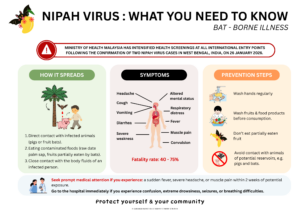
Nipah virus is a bat-borne zoonotic pathogen, meaning it can be transmitted from animals to humans. The natural hosts of the Nipah virus are fruit bats of the Pteropodidae family, specifically the Pteropus genus (flying foxes). Animal-to-human transmission may occur through direct contact with the infected animals or their excretion. This includes the consumption of raw date palm sap or fruit contaminated with the saliva or urine of infected animals, primarily bats. Human-to-human infection is limited but mayoccur among family members, caregivers, community workers, and healthcare providers of infected patients through exposure to their secretions and excretions.
The incubation period (from infection to symptom) may vary from three (3) to 14 days. Incubation up to 45 days, though rare, has been reported. Early symptoms include fever, headaches, muscle pain, vomiting, and sore throat. Some patients may experience dizziness, drowsiness, and neurological signs consistent with acute encephalitis. Seizures may occur in severe cases, leading to coma within 24 to 48 hours. The case fatality ratio (mortality rate) is between 40 to 75%.
Recent Outbreak in Bengal, India
The Indian health authority (IHR NFP) notified the WHO on 26th January 2026 of two (2) confirmed cases of Nipah virus infection in West Bengal State, where they were hospitalised in late December 2025. The authority immediately followed up on the two cases with contact tracing. More than 190 contacts were tested, and all test results returned negative. The Indian National Centre for Disease Control announced on 27 January 2026 that no confirmed cases have been detected in the region since the last two in late December.
Precautions
For travellers visiting high-risk areas:
- Fresh fruits and food products must be washed and cooked thoroughly before
- consumption.
- Avoid raw foods from areas where bats are known to roost.
- Avoid contact with animals of potential reservoirs, e.g. pigs and bats.
- Maintain personal hygiene and practice regular handwashing/sanitising.
- Avoid contact with individuals with known or suspected Nipah virus infection.
Nipah virus infection is a notifiable disease under Malaysian Law [Akta Penyakit Berjangkit 1988 (Akta 342)]. The disease is currently under close surveillance within a One Health approach involving the Ministry of Health, the Department of Veterinary Services, and the Department of Wildlife Protection and National Parks (PERHILITAN). In light of the recent outbreak in India, the Ministry of Health is tightening health screening at international ports of entry, especially for travellers arriving from at-risk countries.